Why Indoor Air Quality Matters
According to the EPA, Americans spend approximately 90% of their time indoors, where concentrations of some pollutants can be 2 to 5 times higher than typical outdoor levels. For Michigan residents who spend even more time indoors during cold winter months, indoor air quality (IAQ) has significant implications for health and comfort.
Poor indoor air quality can contribute to immediate symptoms like headaches, fatigue, and respiratory irritation, as well as long-term health effects. Understanding what affects your indoor air and how to test for problems is the first step toward creating a healthier home environment.
Common Indoor Air Pollutants
Indoor air quality is affected by numerous pollutants from various sources. Biological pollutants like mold, dust mites, pet dander, and bacteria can cause allergies, asthma, and infections. Chemical pollutants or VOCs from paints, cleaners, building materials, and furnishings can cause eye and throat irritation, headaches, and organ damage. Combustion pollutants from gas stoves, fireplaces, and attached garages can cause CO poisoning and respiratory issues. Particulates from dust, smoke, cooking, and candles can cause respiratory irritation and cardiovascular effects. Radon from soil beneath the foundation can cause lung cancer.
Volatile Organic Compounds (VOCs)
VOCs are chemicals that evaporate at room temperature and are found in many household products and building materials. Common sources include paints, stains, and varnishes, cleaning and disinfecting products, air fresheners and scented candles, new furniture and carpeting, building materials and adhesives, and personal care products.
Some VOCs, like formaldehyde and benzene, are known carcinogens. Others cause respiratory irritation, headaches, and neurological effects. VOC testing measures the concentration of these chemicals in your indoor air.
When to Consider IAQ Testing
Indoor air quality testing is valuable in several situations. Health symptoms like unexplained headaches, fatigue, respiratory issues, or symptoms that improve when away from home may indicate IAQ testing can identify potential causes. Odor concerns with persistent musty, chemical, or unusual odors may indicate air quality problems that testing can identify. New construction or renovation often involves new building materials that off-gas VOCs, and testing can verify when levels have decreased to acceptable ranges. Post-remediation verification after mold remediation or other environmental work confirms that air quality has been restored. Baseline assessment provides some homeowners with understanding of their indoor air quality as a baseline for comparison or peace of mind.
Types of Indoor Air Quality Testing
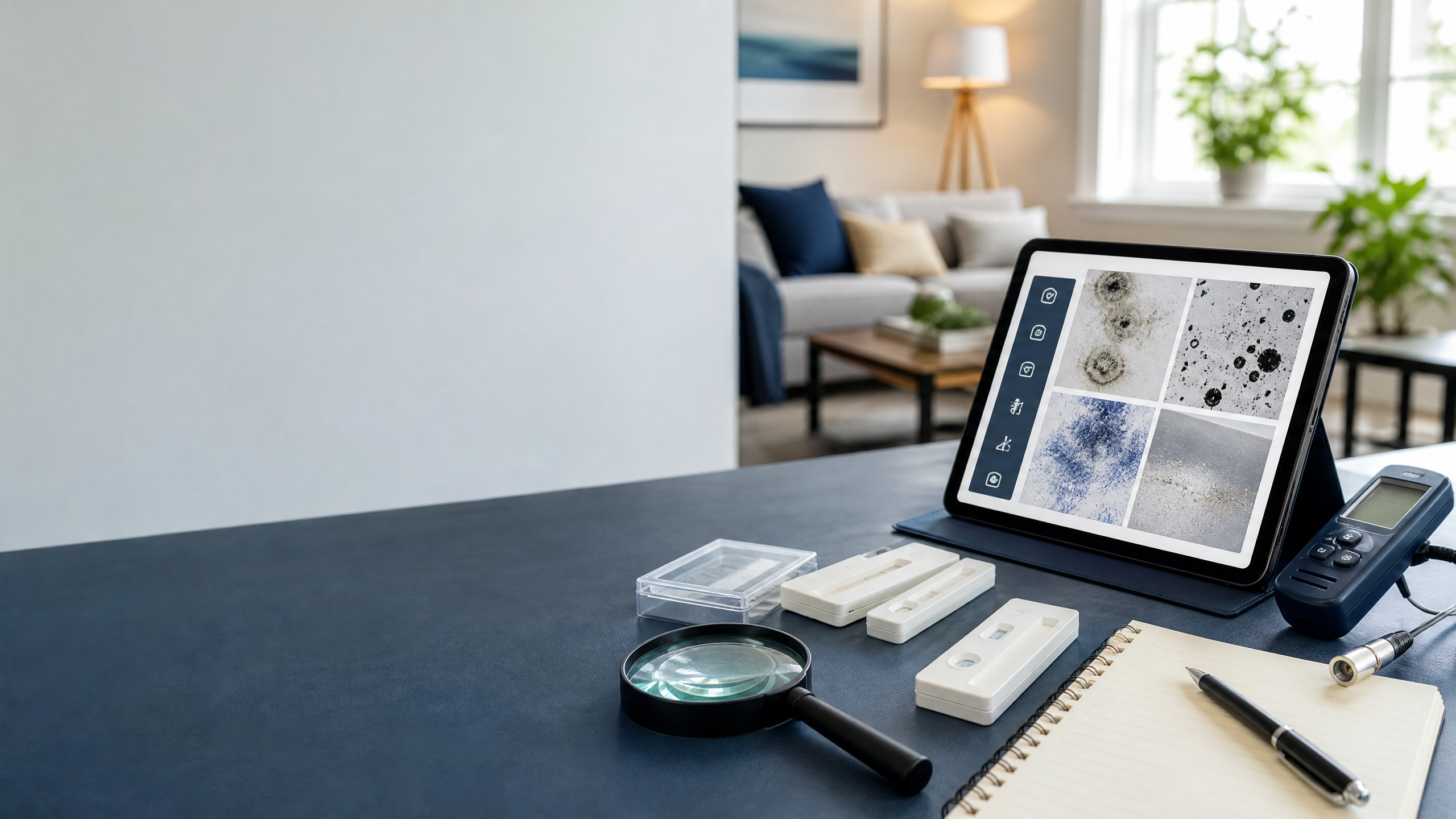
Professional IAQ assessments may include several types of testing. Particulate measurement uses instruments to measure the concentration and size distribution of airborne particles, including dust, allergens, and combustion byproducts. VOC screening identifies and quantifies volatile organic compounds in the air, with results compared to guidelines for acceptable indoor levels. Mold spore analysis collects and analyzes air samples to identify mold species and spore concentrations, comparing indoor levels to outdoor baselines. Carbon dioxide monitoring detects elevated CO2 levels that indicate inadequate ventilation, which can affect comfort and concentrate other pollutants. Humidity assessment measures both high and low humidity levels that can affect health and comfort, with proper humidity also influencing mold growth potential.
Improving Indoor Air Quality
Once testing identifies issues, several strategies can improve indoor air quality. Source control eliminates or reduces pollution sources and is the most effective approach. This might mean choosing low-VOC products, addressing moisture problems, or improving combustion appliance venting. Ventilation increases outdoor air exchange to dilute indoor pollutants through mechanical ventilation systems, exhaust fans, or simply opening windows when weather permits. Air cleaning with HEPA filters, activated carbon filters, and other air cleaning technologies can reduce specific pollutants, though effectiveness varies by pollutant type and device quality. Humidity control maintaining relative humidity between 30-50% reduces mold growth potential and dust mite populations while maintaining comfort.
Michigan-Specific Considerations
Michigan's climate creates unique IAQ challenges. During winter months, tightly sealed homes with minimal ventilation can accumulate pollutants, combustion appliances work harder, and humidity levels may drop too low. During spring and fall, seasonal transitions bring pollen and outdoor allergens indoors, and temperature fluctuations can cause condensation and moisture problems. During summer, high humidity can promote mold growth particularly in basements, and air conditioning helps control humidity but requires proper maintenance.
Professional IAQ Assessment
A comprehensive indoor air quality assessment from Lakepointe Inspections includes visual inspection for potential pollution sources, temperature and humidity measurements, air sampling for mold, particulates, or VOCs as appropriate, identification of ventilation issues, and a detailed report with findings and recommendations.
Our goal is to help you understand your indoor environment and take effective steps to improve it.
Contact us at 586-330-0100 to schedule an indoor air quality assessment for your Michigan home, or request a quote online.
Share this article
Need Professional Testing?
Lakepointe Inspections provides certified environmental testing and property inspections throughout Michigan. Contact us for accurate, unbiased results.