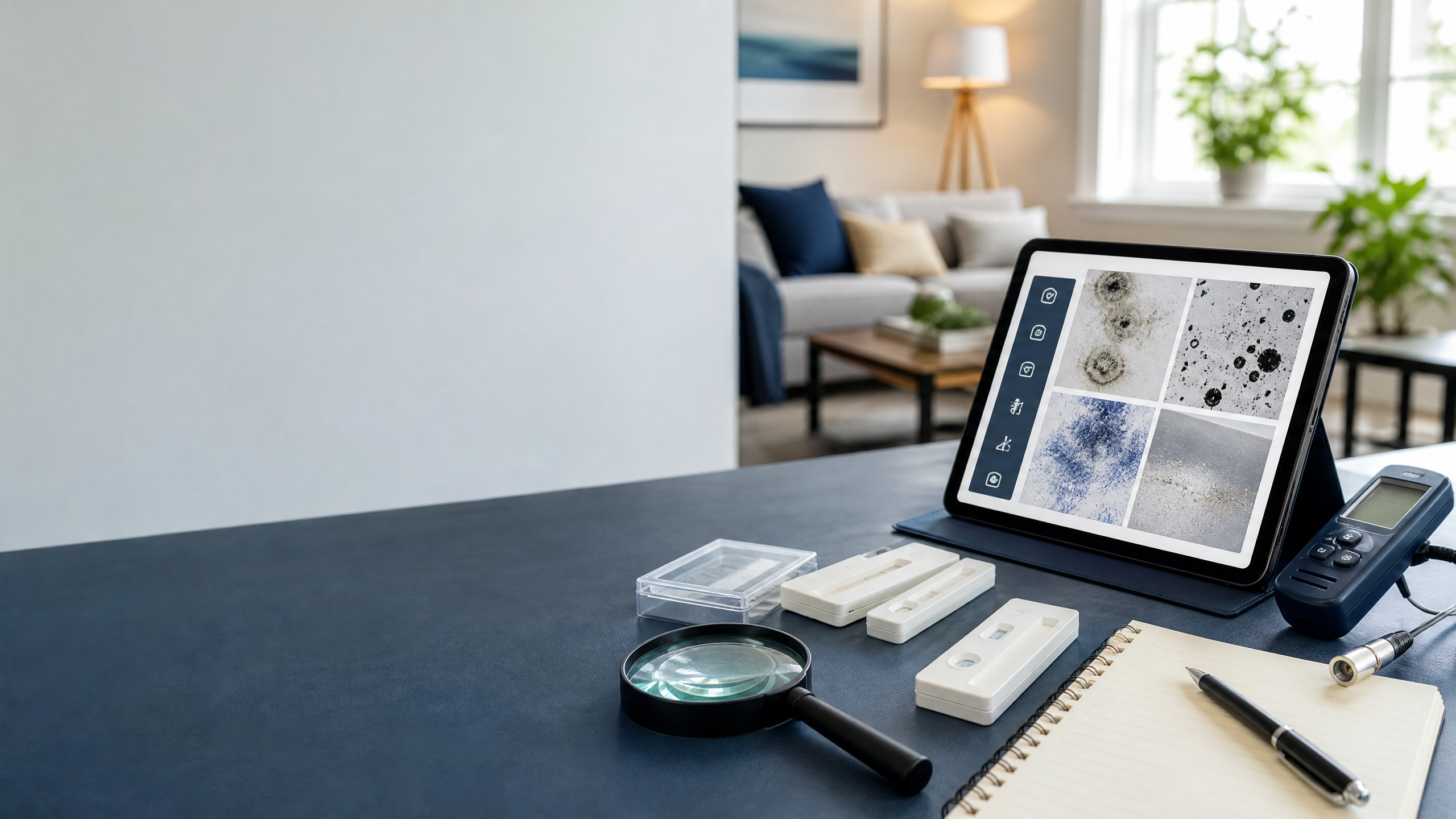
The Hidden Problem in Michigan's Mold Testing Industry
Every year, thousands of Michigan homeowners fall victim to mold testing scams. These deceptive practices range from inflated test results to unnecessary remediation services costing $5,000 to $15,000 or more. The problem is particularly acute in Michigan, where the state has no regulations governing mold testing or remediation companies.
After nearly a decade of providing independent mold testing throughout Southeast Michigan, we've seen the same costly mistakes repeated again and again. Understanding these pitfalls can save you thousands of dollars and protect your family from both mold exposure and predatory business practices.
Mistake #1: Choosing a Company That Tests AND Remediates
This is the single most expensive mistake homeowners make. When the same company that tests for mold also profits from remediation work, there's an inherent conflict of interest. It's like asking a car salesman to inspect your current vehicle—they have every incentive to find problems.
The scam works like this: A company offers "free" or deeply discounted mold inspections. Once inside your home, they "discover" extensive mold contamination requiring immediate remediation. Conveniently, they can start the $8,000 job tomorrow.
The reality: Independent testing often reveals that the "contamination" was exaggerated or that the proposed remediation scope was far larger than necessary. We've seen cases where homeowners were quoted $12,000 for work that legitimately required $2,000.
How to protect yourself: Always use a testing-only company that has no financial stake in finding problems. Their only incentive is accuracy.
Mistake #2: Falling for "Free" or "$99" Mold Inspections
If a mold inspection seems too cheap to be true, it probably is. Professional mold testing requires expensive equipment, accredited laboratory analysis, and trained technicians. A legitimate comprehensive assessment typically costs $300-$600.
The scam works like this: Low-cost inspections are loss leaders designed to get a salesperson into your home. The "inspector" uses fear tactics about "toxic black mold" to pressure you into signing a remediation contract on the spot.
The reality: These inspections often use unreliable testing methods like petri dish settle plates, which can show mold growth from any home—even perfectly healthy ones. The results are meaningless but look alarming to untrained eyes.
How to protect yourself: Expect to pay fair market rates for professional testing. Ask what testing methods will be used and whether samples go to an accredited third-party laboratory.
Mistake #3: Accepting "Instant" Test Results
Legitimate mold identification requires laboratory analysis under a microscope. This process takes 24-72 hours minimum. Any company claiming to provide instant or same-day mold species identification is cutting corners or outright lying.
The scam works like this: An inspector waves a device around your home and declares you have "dangerous levels of toxic mold." They may show you numbers on a screen that look scientific but mean nothing without laboratory verification.
The reality: Moisture meters and particle counters can indicate potential problems, but they cannot identify mold species or determine if spore levels are abnormal. Only laboratory analysis of properly collected samples can do that.
How to protect yourself: Insist on laboratory-confirmed results with a chain of custody. Ask for the name of the accredited lab that will analyze your samples.
Mistake #4: Not Understanding What "Normal" Mold Levels Mean
Here's something most homeowners don't realize: every home has mold. Mold spores are everywhere in the environment, both indoors and outdoors. The question isn't whether you have mold—it's whether indoor levels are elevated compared to outdoor levels.
The scam works like this: A dishonest inspector shows you a report indicating thousands of mold spores per cubic meter of air. Without context, this sounds terrifying. They don't mention that outdoor levels are often similar or higher.
The reality: Professional mold assessment compares indoor samples to outdoor baseline samples collected at the same time. If indoor levels are similar to or lower than outdoor levels, there's typically no indoor mold problem—regardless of the absolute numbers.
How to protect yourself: Ask whether outdoor comparison samples will be collected. Any assessment without outdoor baselines is incomplete.
Mistake #5: Ignoring the Moisture Source
Mold needs moisture to grow. Without addressing the water source, any remediation is temporary—the mold will return. Yet many companies focus exclusively on removing visible mold without investigating why it grew in the first place.
The scam works like this: A company removes moldy drywall and treats surfaces with antimicrobial chemicals. Six months later, the mold is back because the leaky pipe behind the wall was never fixed. Now you need to pay for remediation again.
The reality: Effective mold assessment must include moisture mapping using infrared cameras and moisture meters. Finding and fixing the water source is more important than killing existing mold.
How to protect yourself: Choose inspectors who use thermal imaging and moisture meters as part of their assessment. Ask specifically how they will identify the moisture source.
The Bottom Line: Protect Yourself Before You Call
Mold problems are real, and professional testing is valuable when done correctly. But the lack of regulation in Michigan means homeowners must be their own advocates. Before hiring any mold testing company, ask these questions:
- Do you offer remediation services? (The answer should be "no")
- What testing methods do you use?
- Which accredited laboratory analyzes your samples?
- Will you collect outdoor comparison samples?
- How do you identify moisture sources?
Get the Complete Guide: 8 Red Flags Checklist
We've compiled everything you need to know into a free downloadable guide: "8 Red Flags: How to Spot Mold Testing Scams." This comprehensive checklist covers all the warning signs of dishonest mold companies, including what they tell you versus what's really happening, and exactly how to protect yourself.
Download the free 8 Red Flags Checklist and arm yourself with the knowledge to make informed decisions about mold testing.
Need Honest, Independent Mold Testing?
Lakepointe Inspections provides testing-only services throughout Southeast Michigan. We never remediate, so our results are always unbiased. Our IAC2-certified inspectors use proper volumetric air sampling, accredited laboratory analysis, and thorough moisture assessments to give you accurate answers.
Contact us at 586-330-0100 or request a quote to schedule independent mold testing. We serve homeowners throughout St. Clair Shores, Detroit, Warren, Sterling Heights, and all of Southeast Michigan.
Share this article
Need Professional Testing?
Lakepointe Inspections provides certified environmental testing and property inspections throughout Michigan. Contact us for accurate, unbiased results.